AEP brings together programming, artificial intelligence and engineering to teach students how to develop intelligent systems for industry and energy. The updated Intelligent Industrial Automation programme connects data, algorithms and equipment: helping engineers assess process conditions, anticipate changes and make effective decisions.
Explore study opportunities
Compare degree levels and programme editions, then check the admissions requirements for your chosen programme.
G7 · INTELLIGENT INDUSTRIAL AUTOMATION
Intelligence for real industrial processes
How can an engineer detect a fault early, use sensor data to control a plant or test a solution on a digital twin? These are the kinds of challenges that connect AEP’s engineering foundations with industrial artificial intelligence — Industrial AI.
Data → analysis → decisions
Programming, data analytics, machine learning and digital twins provide tools for equipment diagnostics, forecasting and optimisation. At master’s level, students also explore systems analysis and cloud technologies.
From algorithms to equipment
Sensors, industrial controllers, robotics and supervisory control systems connect software with physical processes. Students learn to design control systems and integrate their components.
Practical work on laboratory equipment
In the Phoenix Contact EduNet laboratory, students programme controllers, develop operator interfaces and work with the industrial Internet of Things. PLCnext training stations, Node-RED and MQTT connect automation with data processing and communication.
Phoenix Contact EduNet laboratory → · All AEP laboratories →
Degree programmes and people
Founded in 1958 as Ukraine’s first department of industrial automation, AEP now offers a pathway from bachelor’s and master’s degrees to PhD study, combining engineering education with digital technologies.
Doctoral study and research
The department participates in Igor Sikorsky KPI’s joint PhD programme in Automation and Computer-Integrated Technologies, specialty G7. Research includes energy-process control, digital twins, equipment diagnostics and efficient heating systems.
Recent examples include a digital twin for a condensing-boiler heating system (2025) and Vladyslav Temchur’s doctoral research on predictive equipment diagnostics (defended in 2026).
Department contacts
6 Politekhnichna Street, Building 5, 8th floor, Kyiv 03056.
Department head
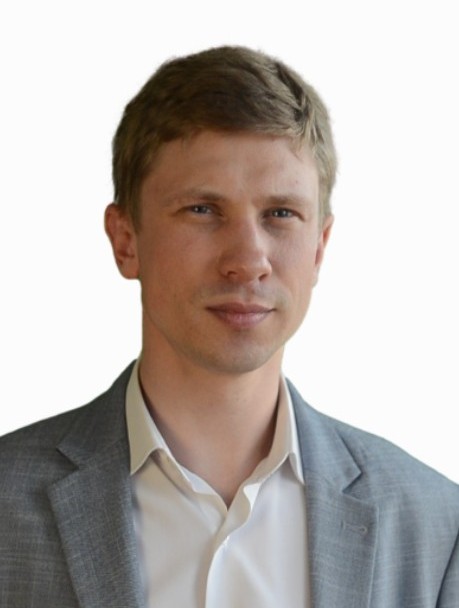
Pavlo Novikov
Acting Head of the Department of Automation of Energy Processes; Candidate of Technical Sciences, Associate Professor.